Table of Contents
Every click, search, and swipe today adds to a growing digital footprint. This footprint spans apps, devices, cloud platforms, and increasingly, AI-driven tools.
Businesses are increasingly relying on data. While they use it to personalize experiences and drive growth, concerns are also rising around how that data is collected and used.
Governments worldwide are introducing stricter regulations, but gaps in enforcement and global consistency still remain. Understanding data privacy statistics has therefore never been more critical. For example, 83% of consumers say they are concerned about how their data is used online.
In this article, we’ll break down the most important data privacy facts, trends, and insights shaping 2026. It will help you better understand the balance between data-driven innovation and user trust.
Data Privacy Statistics: Key Findings
The modern digital world is a balancing act. Technology is everywhere, but people are more protective of their personal data than ever before. From massive legal fines to the multi-million dollar costs of data breaches, the stakes for protecting information have never been higher. The following statistics highlight the rising cost of security failures and a clear shift in how both consumers and governments demand privacy.
The State of Data Privacy Worldwide
Privacy today is shaped by laws, breaches, and growing user awareness. Over the past decade, data protection has shifted from a regional issue to a global regulatory movement.
Global Privacy Laws and Coverage
Data privacy laws now cover most of the world, but not equally.
- As of 2026, 155 out of 194 countries have enacted data protection and privacy legislation
- These laws cover around 79% of the global population.
- Major multi-region regulations shaping global privacy include:
- General Data Protection Regulation (EU)
- Personal Information Protection Law (China)
- Growing number of US state laws (e.g., California, Virginia, Colorado)
GDPR, Fines, and Global Impact
The General Data Protection Regulation (GDPR) is the most influential privacy law in the world.
- Since its enforcement in 2018, GDPR fines have exceeded €7.1 billion.
- Some of the largest fines include:
- €1.2 billion fine against Meta (2023)
- €746 million fine against Amazon (2021)
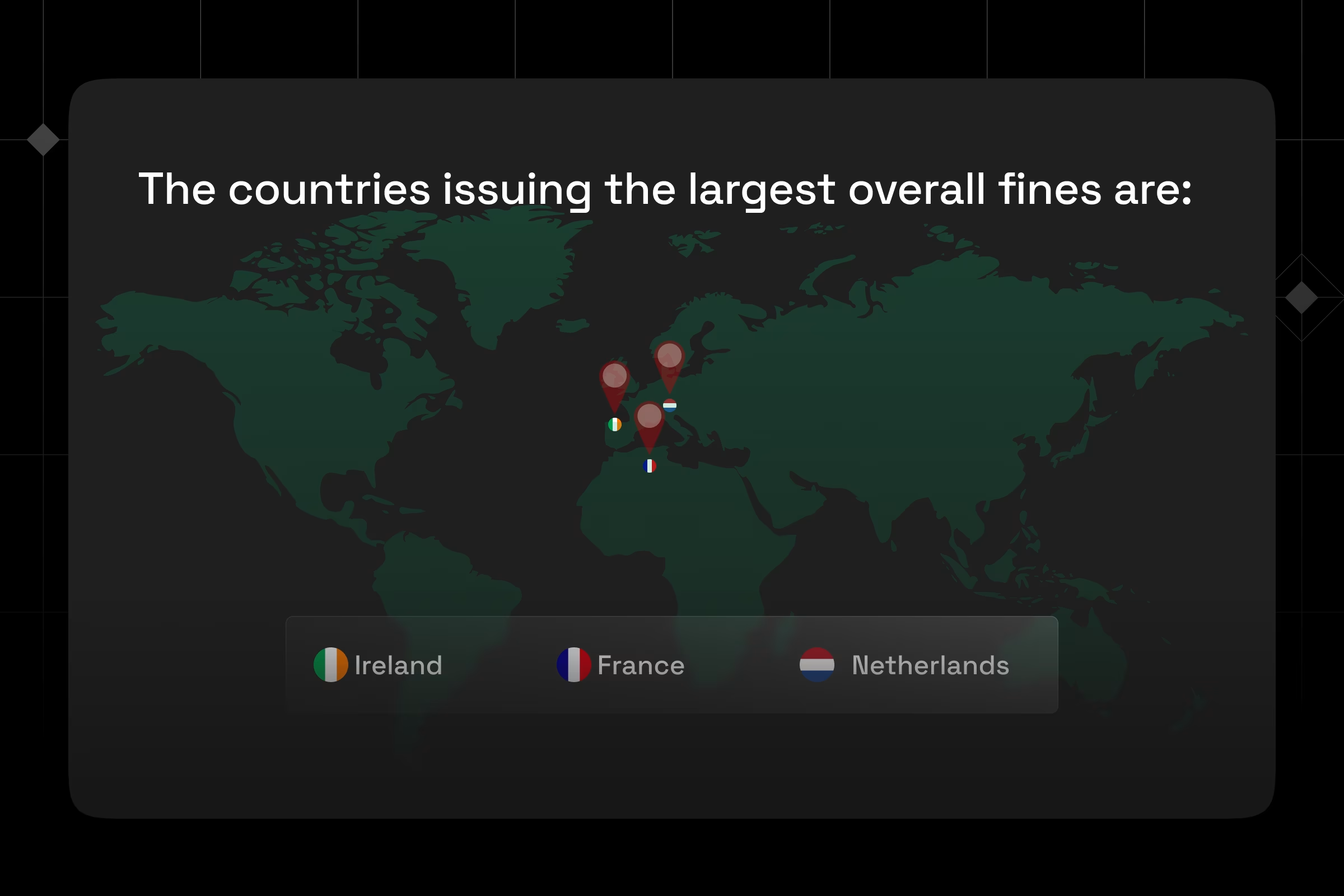
- Regulators are increasingly coordinating enforcement across EU member states.
The Brussels Effect and Global Influence
GDPR’s impact goes far beyond Europe.
- Many countries have adopted GDPR-like frameworks to align with EU standards.
- Global companies often apply GDPR rules worldwide to simplify compliance.
This phenomenon is known as the Brussels Effect, where EU regulations effectively become global standards.
General Data Privacy Statistics
Before going deeper, it helps to understand how users and businesses see privacy today. The gap between concern and action, and between regulation and implementation, defines much of the current landscape.
Consumer Concerns and Trust
Consumers are more aware of privacy risks than ever, but trust remains fragile.
- People tend to trust government institutions more than private companies when it comes to handling sensitive data.
- 79% of Americans lack confidence that companies will take responsibility or admit fault if personal information is compromised.
- 81% of Americans believe the risks of corporate data collection are greater than the rewards.
- Approximately 86% of people say they are taking steps to protect their online privacy.
- 48% of consumers stopped doing business with a company after a data breach.
Business Perspective on Privacy
For businesses, data privacy has shifted from a compliance task to a strategic priority.
- 94% of organizations say customers won’t buy from them if data is not properly protected.
- While compliance requires a significant financial commitment, 96% of companies report that the eventual rewards far exceed the costs.
- An overwhelming 99% of organizations see measurable gains from privacy spending, particularly through improved agility and faster innovation.
- Currently, 79% of the world’s nations have enacted formal legislation to protect data and personal privacy.
Businesses are increasingly adopting tools like:
Key Takeaway
- Consumers are concerned and cautious, but often feel powerless
- Businesses are investing heavily in privacy, driven by regulation and trust
The biggest gap remains between expectations and execution. This gap is what continues to shape modern data privacy trends.
Online Privacy Behavior and Tracking Trends
Users are aware of risks, but their behavior does not always match their concerns. This gap between awareness and action is one of the most important patterns in modern data privacy statistics.
Browsing and Tracking Behavior
Even though users say they care about privacy, their actual behavior tells a more complex story:
- Around 60% of users take some steps to protect their privacy.
- Among full-time marketing and customer experience leaders across eight countries, 75% reported a continued reliance on third-party cookies.
This contradiction is clear: users try to protect themselves, yet tracking remains nearly unavoidable.
Cookie Consent Patterns and Dark Patterns
Platforms designed cookie banners to improve transparency; in reality, however, they often manipulate user behavior:
- 77% of cookie banners use “dark patterns” to push users toward accepting tracking.
- Over 85% of the websites investigated use visual nudges to push users toward "accept all" settings, even when a reject option is available.
- Common tactics include:
As a result, consent is often neither fully informed nor truly voluntary.
Cookie and Data Collection Trends
User interaction with cookie banners reveals a strong pattern of convenience over privacy:
- Across many GDPR‑compliant websites, only about 30–60% of visitors consent to cookies, depending on cookie banner.
- On average, cookie‑banner acceptance rates sit around 31%, but they vary widely by country and context.
- Around 34% of users completely ignore cookie banners, avoiding the decision altogether.
- Only about 15% of users actually read full cookie and privacy notices before acting.
Personalization vs Privacy Trade-Off
There’s an ongoing trade-off between better experiences and data privacy:
- Personalized ads and content rely heavily on user data collection and tracking.
- Yet, increasing awareness is leading to more resistance to tracking over time.
- Consent rates have dropped as platforms give users clearer choices (e.g., visible “Reject” options).
Users want personalized experiences but also demand control over their data.
Key Takeaway
- Most users are aware of privacy risks, but don’t always act accordingly
- Tracking is nearly universal across the web
- Cookie systems often rely on design tricks to gain consent
The gap between what users say and what they actually do online remains the defining tension in modern privacy statistics.
Data Breach Statistics and Costs
Privacy failures have a direct financial and reputational impact. Data breaches are no longer rare events; they are frequent, costly, and enduring in impact.
Scale of Data Breaches
The scale of data breaches continues to grow globally:
- In its 2024 report, the Verizon DBIR analyzed 22,052 incidents and confirmed 12,195 data breaches across 139 countries.
- These breaches exposed billions of personal records, including emails, passwords, and financial data.
- The most commonly exposed data types include:
- Some of the largest breaches in history:
- Yahoo (2013 to 2014): approximately 3 billion accounts affected
- CAM4 (2020): 10.88 billion records exposed

Financial Impact of Breaches
The cost of data breaches continues to rise year after year:
- The average global cost of a data breach is $4.88 million according to Petronella.
- Costs vary by region:
- Certain industries face even higher costs:
Detection and Response
The speed of detection and response significantly affects overall breach costs:
- The average time to identify and contain a breach is 277 days.
- Companies that detect breaches faster significantly reduce costs.
- According to IBM's 2025 report, global data breach costs decreased by 9 percent due to the influence of AI.
- Organizations with strong incident response plans save an average of $1.23 million compared to those without
Key Takeaway
- Data breaches are frequent, large-scale, and growing
- Financial impact is significant and rising globally
- Faster detection and modern tools like AI can dramatically reduce losses
Government Surveillance and Data Requests
Privacy is not solely a corporate concern; governments play an equally significant role. Around the world, law enforcement and intelligence agencies regularly request user data from tech platforms, fueling ongoing debates about privacy vs security.
Global Data Requests
Government data requests to major tech companies have increased significantly:
- In the first half of 2024 alone, Google received over 82,000 government data requests for user information, covering hundreds of thousands of accounts worldwide.
- Meta (Facebook & Instagram) reported 374,516 government data requests globally in 2025.
- TikTok reports from 2019 to 2024, the total number of law enforcement requests for user data skyrocketed by nearly 5,000%, growing from 798 to 40,141.
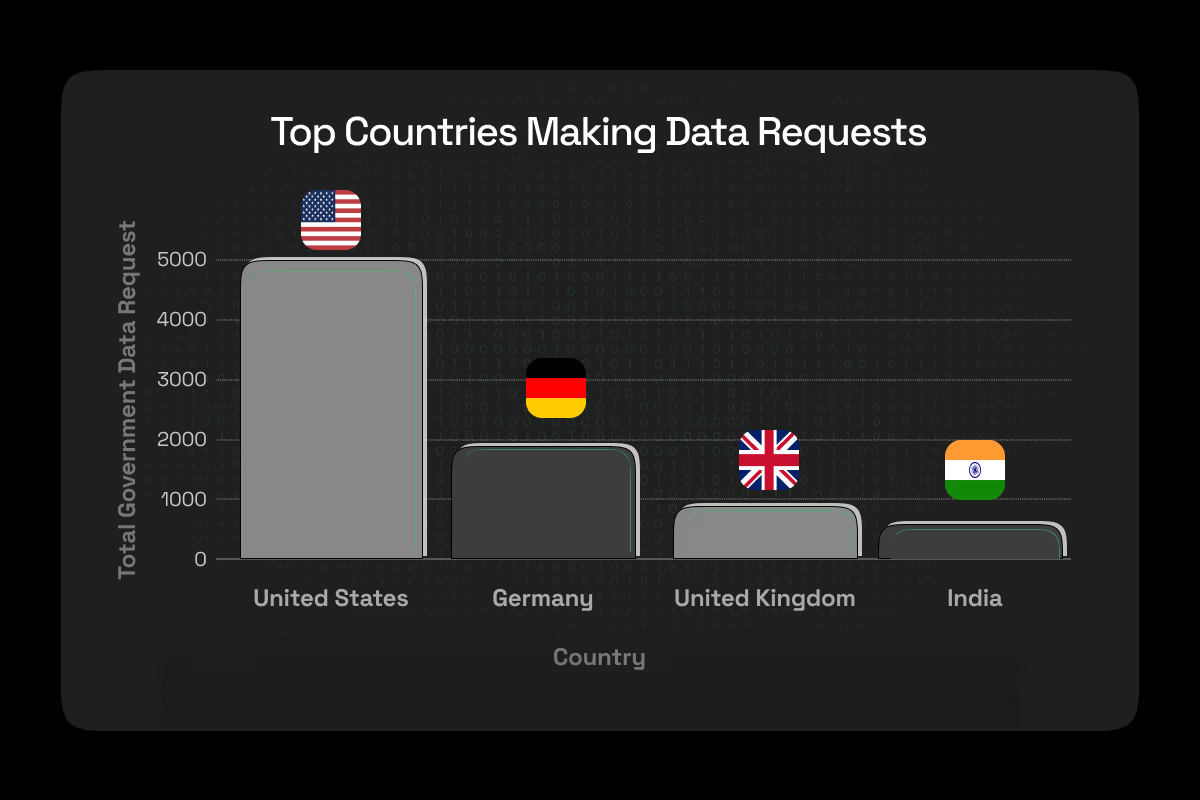
- Surfshark data shows that the US and India are the primary sources of government data requests, making up 33% and 21% of the global total. Germany and the UK also rank among the highest for request volume.
- According to Forbes, tech companies grant about 72% of global government data requests.
Privacy vs Surveillance
The balance between national security and individual privacy remains a major global debate:
- The Internet Society warns that encryption backdoors, which provide government access to private data, degrade overall security and leave users vulnerable to hackers.
- According to the EFF, exceptional access fundamentally compromises security since any built in vulnerability can be exploited by malicious actors and surveillance regimes.
Key concerns include:
- Potential misuse of surveillance powers
- Lack of oversight in some regions
- Expansion of mass data collection systems
In short, more surveillance can improve security, but it can also erode individual privacy if left unchecked.
Internet Freedom and Global Privacy Gaps
Internet users globally seek unrestricted, private access to the internet. However, surveillance and privacy gaps persist and, in some places, are widening significantly.
Internet Freedom Rankings
Privacy protections vary widely across countries:
- Only about 17% of the world’s internet users live in “free” internet environments.
- Countries like Iceland, Estonia, and Chile rank among the most internet-free countries according to Statista.
- According to reports, China, Iran, and Myanmar consistently rank among the least free.
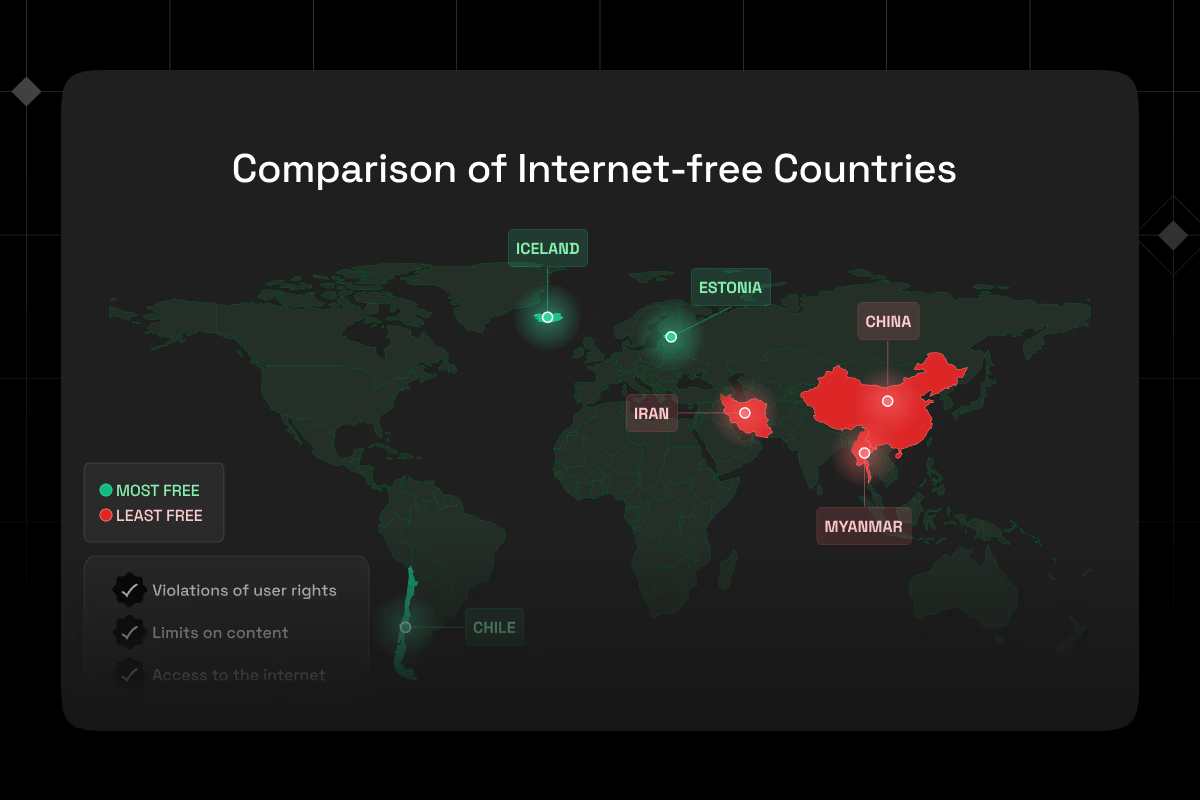
- The Freedom on the Net report evaluates:
- Access to the internet
- Limits on content
- Violations of user rights
Perception of Surveillance
Globally, user perception of surveillance is on the rise:
- Around 80% of internet users worldwide feel their online activities are being tracked or monitored.
- Smart devices are a growing concern:
- Voice assistants, smart TVs, and IoT devices collect large amounts of data
- Many users worry about:
- Always-on microphones
- Background data collection
- Lack of transparency
These issues have led to rising concerns about “always-on surveillance” in everyday life.
Key Takeaway
- Governments are major players in data collection, not just companies
- Data requests are increasing globally, with high compliance rates
- Internet freedom varies widely, creating global privacy gaps
- More users now feel constantly monitored, especially with smart devices
Policy, power, and geography significantly shape data privacy in 2026.
Mobile App and iOS Data Privacy Statistics
Mobile apps are one of the biggest sources of data collection. From social media to fitness trackers, apps continuously gather user data, often far more than users realize.
App Data Collection Trends
Most mobile apps collect some form of user data, regardless of category:
- Based on earlier reports, 37.78% of iOS apps collect at least one type of data not linked to the user.
- Apple's App Privacy Report found that many apps track users across other apps and websites using identifiers.
- Free apps are significantly more likely to collect and share data compared to paid apps, as they rely on advertising revenue.
.avif)
Types of Data Commonly Collected
Mobile apps collect a wide range of personal and behavioral data:
Companies use this data for ad targeting, analytics, and personalization.
User Awareness vs Reality
There is a clear gap between what users think they control and what actually happens:
- Only about 40% of users say they are concerned how apps use their data.
- While many users adjust privacy settings, most do not fully understand tracking mechanisms like background data collection.
This shows that when given a clear choice, most users prefer to limit tracking.
Key Takeaway
- Most mobile apps collect significant amounts of user data
- Free apps rely heavily on data collection for monetization
- There is a major gap between user awareness and actual data practices
- When informed, users tend to opt out of tracking whenever possible
Mobile privacy is less about whether data is collected and more about the transparency and control surrounding that collection.
Social Media Privacy Statistics
Social platforms collect deep personal data, raising trust issues. From behavioral tracking to location and interaction data, social media companies have access to highly detailed user profiles.
User Trust and Behavior
Growing privacy concerns are directly influencing how people use social media:
Data Collection on Social Platforms
Social media platforms collect extensive user data:
- Platforms like Meta and Google track:
- On average, a single user can generate thousands of data points daily through interactions and tracking.
- Regulators are increasing scrutiny on how platforms collect and use minors' data, making children’s data privacy a growing concern.
- Despite concerns, many users still accept default settings. This highlights a gap between awareness and action.
What People Actually Think About Internet Privacy
Most internet users are not just concerned about their data. They are actively changing how they spend money because of it.
Internet Privacy Statistics
- 82% of internet users are concerned about how companies collect and use their personal data and protect them.
- 75-83% opt out of prompted tracking.
- 57% of consumers view AI as a significant privacy threat.
- 84% of consumers want control over financial information to be the most sensitive.
- 48% have already stopped buying from a company because of privacy concerns.
- 66% deleted a phone app for privacy reasons in the past 12 months.
The Industries Paying Price for Data Breaches
Data breaches do not hit every industry equally. Regulated sectors like healthcare and financial services carry the heaviest costs when things go wrong.
Healthcare
- By September 20, 2025, the OCR had received 508 reports of healthcare breaches involving at least 500 people, compared to a total of 739 incidents recorded throughout all of 2024.
- Healthcare breaches average $7.42 million. This is the costliest industry for 14 consecutive years.
- Healthcare breaches take an average of 213 days to detect versus 194 days across other industries.
Financial Services
- Malicious attacks are responsible for 51% of data breaches, while IT failures and human error account for 30% and 19% respectively.
- Financial services breaches average $5.56 million per incident.
Critical Infrastructure
- Geopolitics continues to be the leading factor in cyber risk planning for 2026, with 64% of organizations preparing for state sponsored attacks on infrastructure and data.
- Critical infrastructure averages $4.82 million and education $3.80 million per breach.
- Customer PII is involved in 53% of all breaches.
- Breaches taking longer than 200 days to contain cost $5.01 million on average.
How the US Is Handling Privacy, State by State
With no federal privacy law in place, individual states are stepping up. Here is where the US stands today and what businesses need to know.
US State-Level Privacy Laws
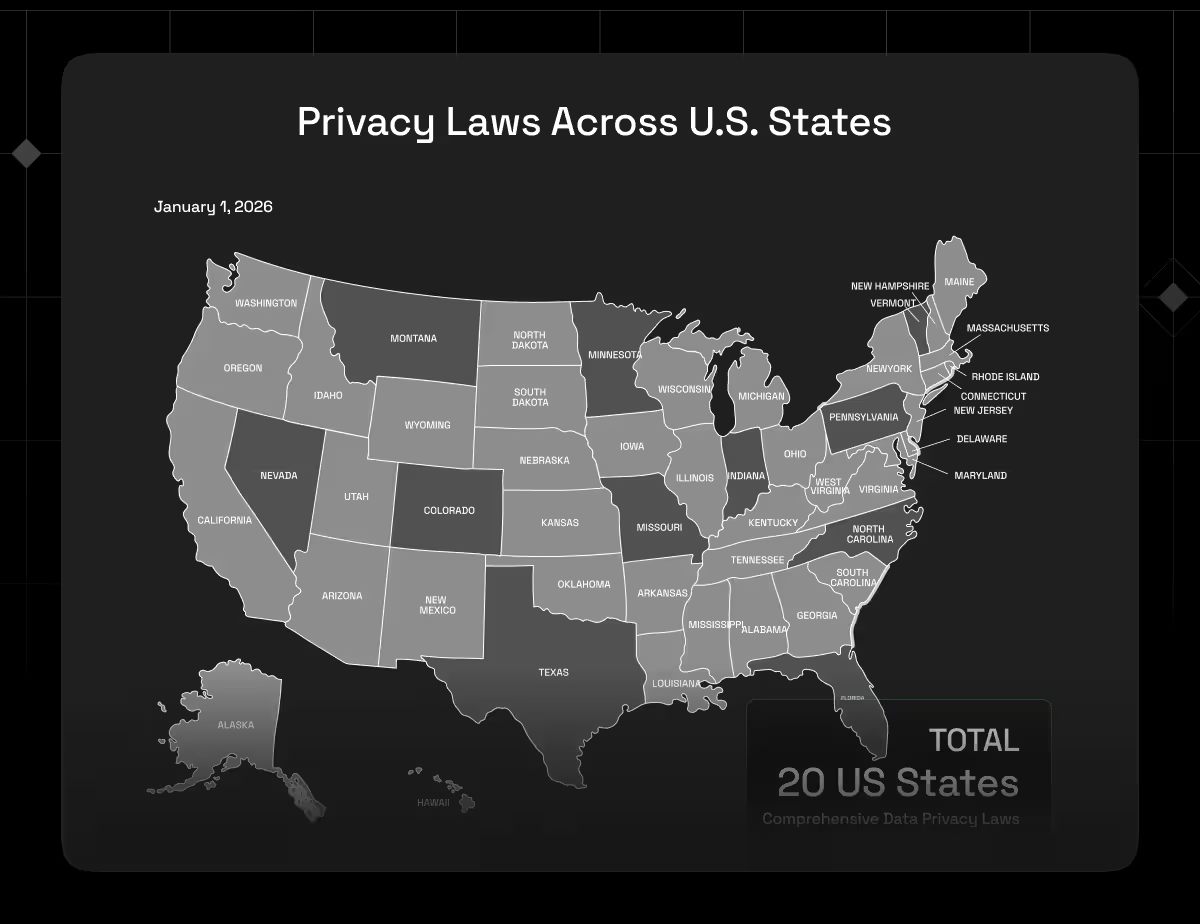
- 20 US states now have comprehensive data privacy laws, with Indiana, Kentucky, and Rhode Island taking effect January 1, 2026.
- California CCPA/CPRA fines range from $2,663 to $7,988 per violation.
- The largest CCPA fine to date was $1.35 million against Tractor Supply Company in 2025.
- From January 2026, California requires mandatory cybersecurity audits and risk assessments for automated decision-making technology.
- 30 states still have no comprehensive privacy legislation, including New York, Illinois, and Pennsylvania.
Business Adoption of Privacy Technologies
As privacy technologies gain wider adoption, their impact on business operations is also growing.
Privacy Tech Growth
As privacy becomes a business priority, investment in privacy-enhancing technologies (PETs) is accelerating.
- AI-driven privacy solutions are expected to grow at a CAGR of more than 25% over the coming years, according to industry estimates.
- Over 60% of organizations plan to increase spending on privacy technologies in the next 1 or 2 years.
- Regulated industries are rapidly adopting privacy-enhancing technologies (PETs), such as data anonymization, encryption, and differential privacy.
ROI of Privacy
Investing in privacy is not just about compliance. Instead, it delivers measurable business value:
- 96% of organizations say privacy investments generate positive ROI.
- Companies report benefits such as:
- Increased customer trust
- Improved brand reputation
- Reduced breach-related costs
- Privacy is increasingly discussed at the board level. Executives now treat it as a strategic risk and opportunity.
- Strong privacy practices can significantly reduce legal and compliance risks.
AI and Data Privacy Risks
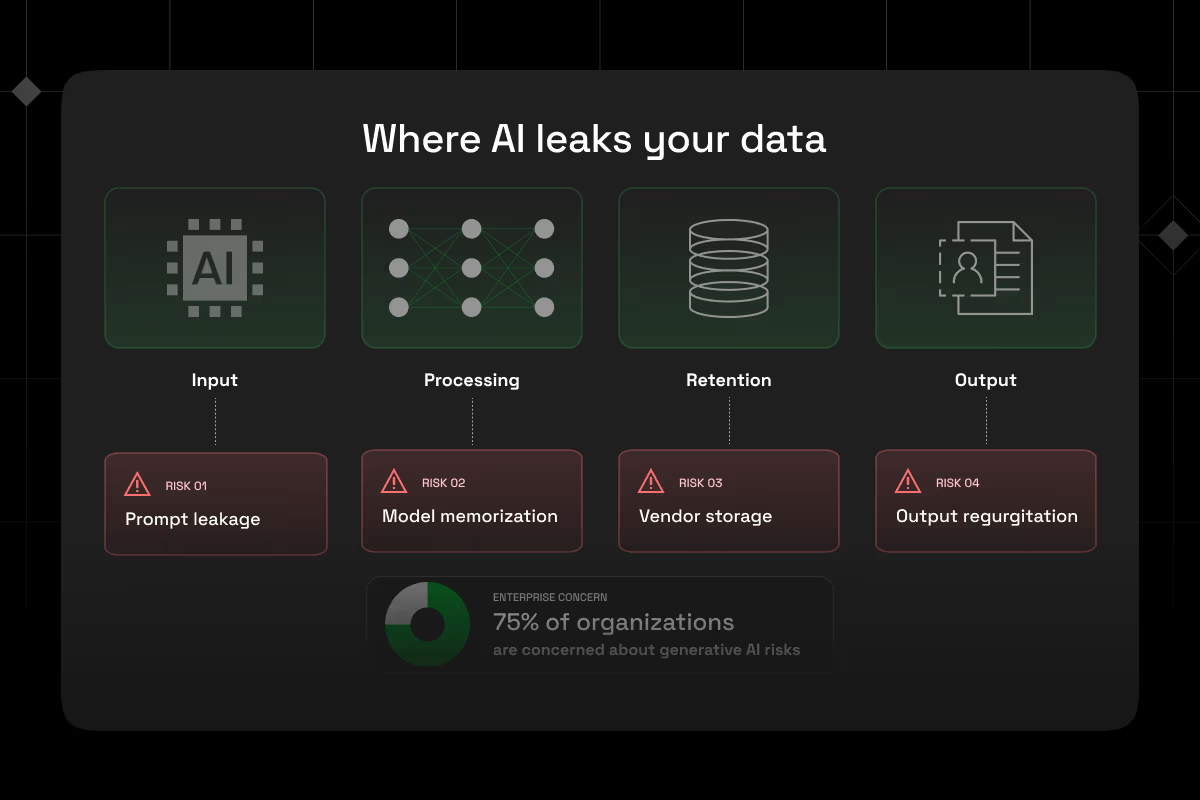
AI introduces a new and expanding layer of privacy risk. As organizations adopt generative AI and automation, concerns around data misuse, leakage, and governance are also growing quickly.
Generative AI Risks
The rise of generative AI tools has introduced new privacy challenges:
- Approximately 75% of organizations say they are concerned about risks related to generative AI.
- Many companies worry that employees will unintentionally share confidential data with AI tools.
AI Governance and Protection
To address these risks, organizations are investing in AI governance and security:
- Large enterprises are increasingly adopting AI monitoring and governance tools.
- Governments and regulators are introducing AI governance frameworks, such as:
- Risk-based AI regulations
- Transparency and accountability requirements
- AI-powered security tools can help detect threats faster and reduce breach costs.
- Organizations using AI security tools can save up to $1.9 million per breach.
Key Takeaway
- Businesses are rapidly adopting privacy technologies and PETs
- Privacy investments deliver clear ROI and strategic value
- AI introduces new privacy challenges, especially around data usage
- Strong governance and AI security tools are becoming essential
Privacy and AI are now deeply connected. Success depends on balancing innovation with responsible data use.
Privacy Tools and Protection Methods
Users and businesses rely on tools to stay protected. As tracking becomes more advanced, the use of privacy and security tools is growing across both individuals and organizations.
VPNs, Proxies, and Anonymity
Tools like VPNs and residential proxies help users conceal their IP address and reduce tracking:
- The global VPN market is expected to reach $75 billion by 2027, driven by rising privacy concerns.
- Millions of users now rely on VPNs
- VPN usage surged during major privacy events (e.g., data breaches, regulatory changes), showing how behavior responds to risk.
Encryption and Security
Encryption is now a foundational part of modern data protection:
- As of recent data, over 95% of web traffic is encrypted via HTTPS.
- Messaging platforms like WhatsApp and Signal widely deploy end-to-end encryption.
- Businesses are increasingly investing in:
- Data encryption at rest and in transit
- Zero-trust security models
- Secure cloud infrastructure
Compliance, Ethics, and Best Practices
Legal compliance sets the baseline; genuine trust is built by going further. In 2026, organizations are expected not only to comply with regulations but also to demonstrate ethical data practices.
Compliance vs Ethical Data Use
Future Outlook (2027 - 2030)
Data privacy will continue evolving rapidly over the next decade:
- Global cybercrime costs were projected to reach $10.5 trillion annually by 2025, highlighting the growing risk landscape.
- Analysts expect more countries to introduce comprehensive privacy laws.
- Businesses are increasingly adopting privacy-first models, including:
- Data minimization strategies
- First-party data collection
- Privacy-by-design frameworks
Key Takeaway
- Privacy tools like VPNs and encryption are becoming widely adopted
- Compliance is essential, but ethical data use is the real differentiator
- The future will be shaped by stricter laws, higher risks, and stronger user expectations
In 2026 and beyond, you need to build systems that protect data by design, not just by regulation.
Conclusion
Data privacy is no longer just a technical or legal issue. It has become a core business priority. Companies today are expected to handle consumer data with transparency and responsibility, not just protect it.
At the same time, users are more aware than ever. They want control over their personal information, clear explanations of how it’s used, and the ability to make informed choices. When that trust is broken, especially through data breaches, the impact is immediate, affecting both reputation and revenue.
Meanwhile, stricter laws, advancing technology, and rising expectations are quickly reshaping the global data privacy landscape. Staying updated with data privacy statistics helps businesses and individuals make smarter, more informed decisions.
Simply put, privacy is now a key driver of trust, growth, and long-term success.